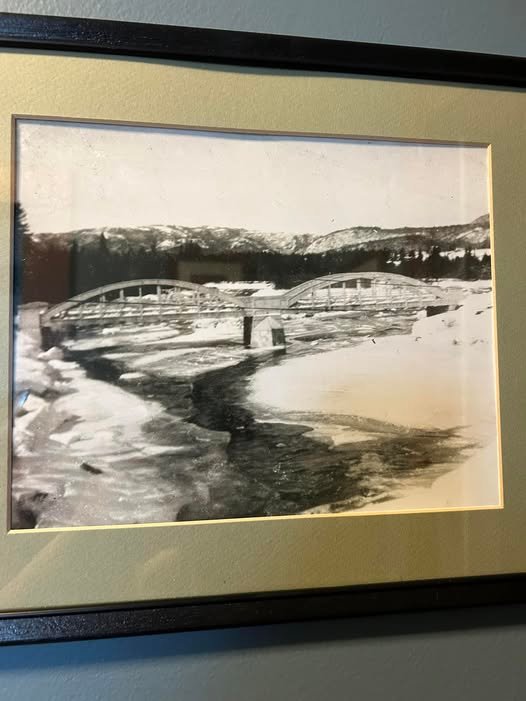
When the Rifter Came Out
Some people only know a river when it is calm. Soft water, quiet banks, a place to swim, fish, or cool off on a warm day.
But around here, people knew another side of it too. They knew what happened when the rifter came out.
The ice could be a foot thick, crashing down the river with a force that was hard to believe unless you had seen it for yourself. It came grinding and cracking downstream, pushing everything in its path.
It tore trees from the bank. It shoved big rocks. It moved boulders that looked like they had been there forever. In a few hours, the river could change the whole look of a place you thought you knew.
The older crowd watched it with worry. They had seen what water and ice could do. Some were scared it would take the bridge out.
That was the grown-up mind. They were thinking about the bridge, the banks, the damage, and what might happen if the river got too wild.
But to a kid, it was something else altogether.
It was noise, power, danger, and wonder all mixed together. The river was roaring, the ice was cracking and grinding, and every big piece that came down looked like it might be the one to do something.
While the older ones were watching with worry, we were looking forward to seeing it. That was the kid’s mind. We didn’t think about what could go wrong the same way. We just knew the river had come alive.
I can still picture it now — being up on top of the arch, looking down at it all, laughing, wide-eyed, and waiting to see what would happen next.
I probably wasn’t half as scared as I should have been.
That is the thing about childhood memories. What frightened the older ones sometimes became the very thing the youngsters remembered with excitement. Not because we understood the danger, but because we were seeing nature move with all its strength.
And when you knew that river — when you swam in it, walked its banks, and knew where the rocks and bends were — you noticed after. You could see what had moved. You could see what had changed. You could see what the ice had carried away.
Then, after the worst of it passed and the water started flowing right again, the river became ours once more.
That was when we went trout fishing. There were big rainbow trout in there — some of them around ten pounds — and to a youngster, that felt like catching a river monster.
We fished it until the warden stopped us, because the salmon were starting to run.
That was the river in those days. One week it could scare the grown-ups half to death with ice and water. Then, not long after, it was where the kids stood with a line in their hands, hoping for the biggest trout they ever seen.
That was spring in its rougher form. Not flowers and soft wind. But river ice, breaking loose, grinding down through the land, reminding everyone that Newfoundland nature was never something to take lightly.
Still, there was beauty in it too. A rough kind of beauty. The kind you only understand if you grew up near a river and watched it change with the seasons.
The rifter came out. The bridge held. The water settled. The trout were there. And the memory stayed.
That’s the Puffincove way.
Just the spark.
The memories do the rest.
I can still feel it if I let my mind go back there. Standing by the piled ice with the backwater raging, casting upstream and letting the lure come down with the current. Then you’d lift the rod at just the right time — and there he was.
Those big rainbow trout were fighters. In that kind of water, they didn’t just pull on the line. They made you feel the strength of the river itself.