
A Little Newfoundland Each Day
A Little Newfoundland Each Day is a small daily note from puffincove — a fun fact, a memory, a place name, an old way, or something from around the island that makes you stop for a second and say, “I forgot about that.”
Not a lecture.
Not a history book.
Just a little spark from the coast.
One fact.
One feeling.
One more reason to keep the light on.
Today’s Little Newfoundland Spark
Some Places Follow You Home
There’s a different pace in Newfoundland.
You might come here for a visit, thinking it will be a few pictures, a few laughs, maybe a feed of fish, maybe a drive along the coast, and maybe even a proper screech-in story to take back with you.
Then the island does what it does.
The roads slow you down. The ocean keeps showing up around every turn. Someone talks to you like they’ve known you for years. A gull cries overhead. An old stage leans into the wind. And if you’re lucky, an iceberg drifts by like it has all the time in the world.
You came to look around.
But somewhere between the salt air, the stories, the weather, the people, and the way the light sits on the water, Newfoundland starts to feel less like a place you visited and more like a place that noticed you back.
That’s the thing about this island.
It doesn’t always rush to impress you. It doesn’t need to.
It lets you stand there for a minute. It lets the wind say what it wants. It lets the harbour, the cliffs, the coves, and the old roads do the talking.
And then, long after you leave, something follows you home.
A memory. A laugh. A picture of an iceberg. A road you wish you had taken. A place name you can’t quite say right, but never forgot.
Some places you visit.
Some places stay with you.
Not a lecture.
Not a history book.
Just a little spark from puffincove.

The Partridgeberry Run
A little berry with a big memory.
In Newfoundland, some things don’t need a big announcement.
They just happen.
The air cools down a little.
The leaves start turning.
Someone says, “The partridgeberries are out.”
And that’s enough.
Before long, people are heading off with buckets, old ice cream containers, lunch bags, rubber boots, and a bit of hope. Some know exactly where they’re going. Some won’t tell you if you ask. A good berry patch is not something people give away easy.
Partridgeberries grow low to the ground, tucked into barrens, boggy spots, rocky edges, and quiet places where the land still feels wild. You don’t just walk up and pick them. You bend down. You take your time. You move slow.
And that’s part of it.
A partridgeberry run was never just about berries.
It was fresh air.
It was muddy boots.
It was Nan’s jam.
It was partridgeberry pudding.
It was Sunday dinner with a bit of tart red on the plate.
It was someone saying, “Don’t step there, there’s a good patch.”
The berries themselves are small, red, and sharp-tasting. Not sweet like candy, but full of Newfoundland character. A little tart. A little stubborn. Better after frost, some would say. Just like a lot of things around here, they improve after a bit of weather.
For generations, people picked them for jams, pies, puddings, sauces, and preserves. They were tucked away for winter, brought out for meals, shared with family, and remembered long after the bottle was empty.
There’s something peaceful about berry picking.
No rush.
No noise.
Just wind, land, and the sound of berries dropping into the bucket.
And every now and then, someone straightens up, looks around, and realizes they’re standing in the middle of something older than themselves.
That’s the beauty of it.
A partridgeberry run is not just a walk for berries.
It’s a walk back.
Back to old roads.
Back to family kitchens.
Back to red hands, full buckets, and the smell of jam on the stove.
A little berry with a big memory.
And around here, that’s more than enough.
puffincove thought
Some treasures don’t shine.
Some grow low to the ground, waiting for someone to remember where to look.
Helping the Whales
A quiet Puffincove story from the edge of the sea
Some Newfoundland stories are not about taking from the sea.
Some are about giving something back.
For generations, the sea was a way of life here. It fed families. It carried boats. It shaped communities. It gave work, worry, food, weather, stories, and memory.
But anyone who lived close to the water knew one thing for sure.
The sea was never just a workplace.
It was alive.
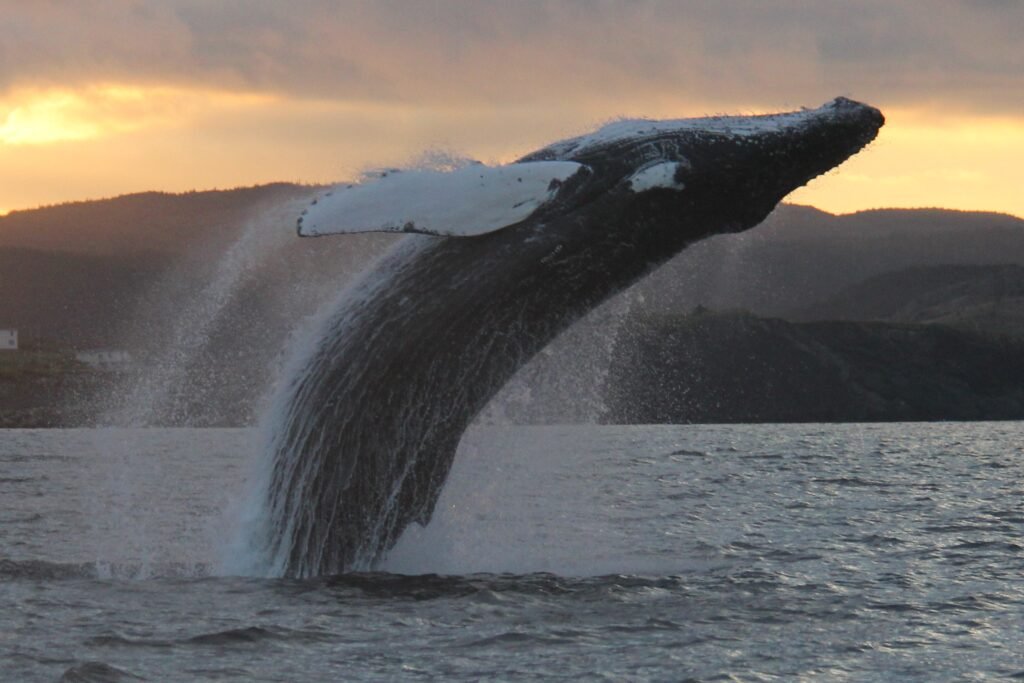
It had moods of its own. Calm mornings when the harbour looked like glass. Rough days when the wind came hard and the waves spoke louder than any person could. Fog that rolled in quiet. Sunsets that could stop you in your tracks. Fish beneath the surface. Birds above it. Whales moving through the deep like old spirits of the ocean.
Newfoundland people understood that.
They may not have always said it in fancy words, but they knew.
The ocean was shared.
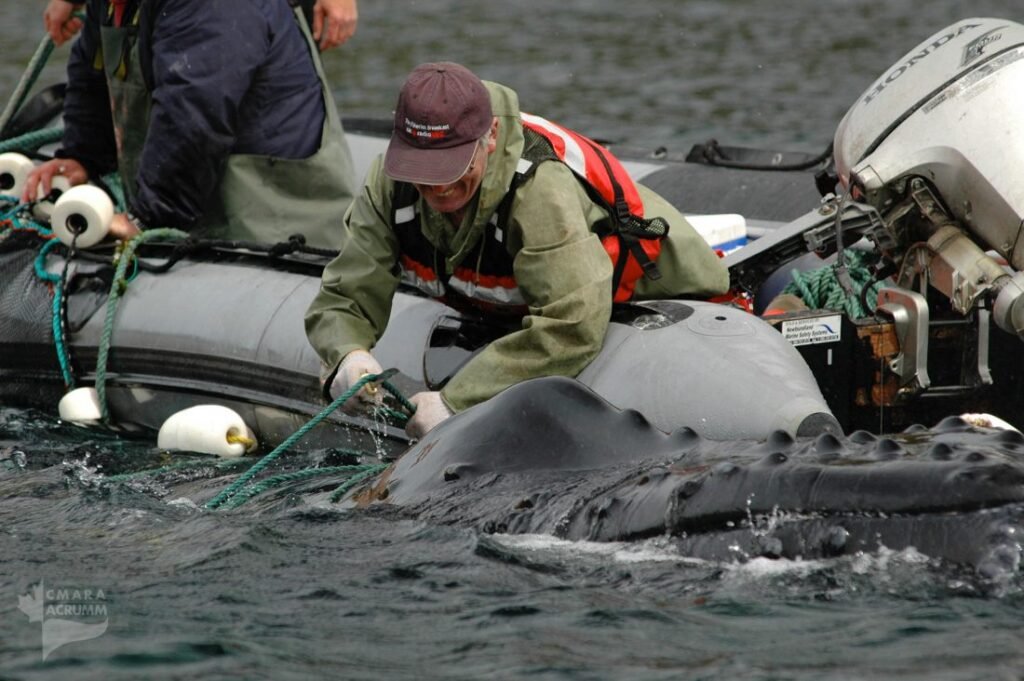
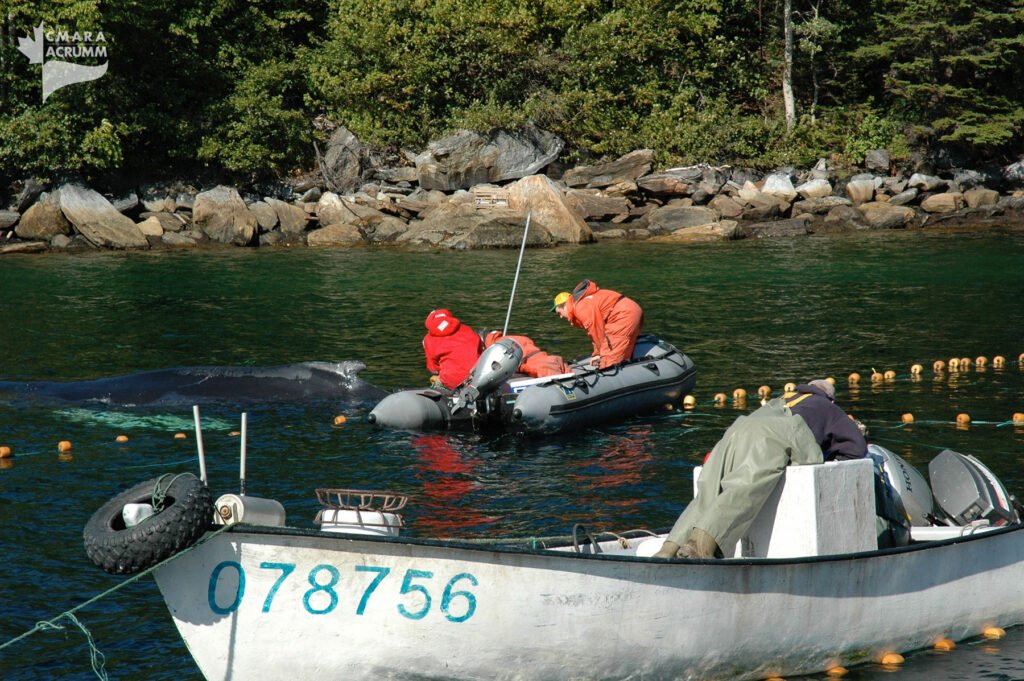
Years ago, if a whale became tangled in fishing nets or gear, it could bring boats together. Fishers nearby would help where they could, working to free the animal and get it back to open water.
There was something powerful in that.
The fishers were there to make a living. Their gear mattered. Their boats mattered. Their time mattered. A net could mean income. A good day’s fishing could help carry a household through.
But the whale was there too.
Not as an enemy.
Not as a thing in the way.
The whale was there because the ocean was its home.
And when a great living creature got caught, people saw more than damage to gear. They saw trouble. They saw struggle. They saw life.
A whale caught in gear was not just a problem in the nets.
It was a great living thing in need of help.
So boats came alongside.
Hands worked the ropes.
People watched the water.
Voices carried across the harbour or out over the swell. Someone would know where to hold. Someone would know when to ease off. Someone would be watching the whale’s movement, waiting for the right moment, hoping the next cut or pull would be enough.
There would have been danger in it too.
A whale is not small. The sea does not always stay calm. A rope under strain can be unforgiving. A boat close to a frightened animal is no place for carelessness.
But still, people helped.
That says something.
It says something about fishers. It says something about coastal people. It says something about the old understanding between Newfoundland and the sea.
The sea gave, but it also asked for respect.
And respect was not just spoken.
It was shown.
It was shown in the way people read the weather. In the way they handled boats. In the way they wasted as little as they could. In the way they knew the birds, the tides, the fish, the fog, and the signs that came before a change.
And sometimes, it was shown in the way people helped a whale go free.
Imagine that moment.
The rope loosens.
The whale shifts.
The water rolls.
Then, all at once, the animal finds its way again.
Back to open water.
Back to the deep.
Back to where it belongs.
There would be no need for a big speech after that.
Just people watching.
Maybe a few quiet words.
Maybe a nod between boats.
Maybe someone saying, “She’s gone now,” while the water settled behind it.
And underneath it all, a feeling that went deeper than words.
Because moments like that stay with people.
Not because they were easy.
Because they mattered.
Puffincove won’t dwell too long on the darker parts of history. Those stories exist, and they can be found elsewhere. The sea has carried hard chapters, and Newfoundland people know that too.
But here, we also remember the respect.
The part where people helped.
The part where boats came together.
The part where the sea was shared.
The part where a whale was not seen as a thing, but as a life.
That is Newfoundland too.
A place where people worked hard from the ocean, but still knew the ocean had a heart of its own.
A place where a net could matter, and a whale could matter too.
A place where the old people may not have talked about conservation with big modern words, but many of them understood something simple and true:
When a living thing is in trouble,
and you can help,
you help.
That is the kind of story Puffincove likes to keep close.
Not loud.
Not polished too smooth.
Just a quiet story from the edge of the sea.
A reminder that respect can live in working hands.
That kindness can happen in a fishing boat.
And that sometimes, giving something back to the ocean is part of belonging to it.
Because the sea was never ours alone.
It was shared.
And every now and then, Newfoundland showed that by helping one of its great creatures find open water again.
All roads lead to puffincove.
Walking on the Earth’s Mantle
The Tablelands of Gros Morne
Some places in Newfoundland make you stop because they are beautiful.
The Tablelands make you stop because they feel almost impossible.
In Gros Morne National Park, the land suddenly changes. The green hills give way to bare orange-brown rock, wide open slopes, and a landscape that looks more like another planet than part of the island.
But that strange-looking rock has a story older than memory.
The Tablelands are made from rock that was once deep inside the Earth, part of the Earth’s mantle. Ancient forces pushed it upward, leaving it exposed where we can see it, touch it, and walk across it today.
Imagine that for a moment.
The ocean nearby.
The wind coming over the land.
The mountains standing quiet.
And under your feet, rock that came from deep within the Earth.
It is one of those places that reminds you how old this island really is.
Newfoundland does not have to shout to be impressive.
Sometimes it just shows you a bare hillside in Gros Morne and lets the story speak for itself.
Around here, even the mountains have old stories.
And the Tablelands may be one of the oldest stories standing in plain sight.
First shared from the puffincove logbook — where the sparks begin.
All roads lead to puffincove.
Newfoundland Kept the Mark
From L’Anse aux Meadows to old harbour towns like Trinity
Long before Canada existed…
Long before the railway crossed the island…
Long before roads wound around the bays and coves…
People were already finding their way to Newfoundland.
Over 1,000 years ago, Norse voyagers stood on Newfoundland shores at L’Anse aux Meadows, on the northern tip of the island.
They built shelters, worked iron, repaired boats, and looked out across the same North Atlantic that still shapes life here today.
Imagine that for a moment.
The fog.
The wind.
The cold salt air.
The black spruce.
The sound of the ocean against the rocks.
Some things never really changed.
Centuries later, places like Trinity grew into some of the oldest English-settled communities in North America.
Fishing rooms, stages, saltbox homes, narrow paths to the water — little harbours holding on against the edge of the sea.
Newfoundland history does not feel far away here.
You can still walk it.
Still hear it.
Still see it in the old buildings, the coves, the wharves, and the stories passed around kitchen tables.
Maybe that is why this island feels different to so many people.
It is old in the bones.
And through storms, hard winters, war years, changing times, and roads that came much later…
Newfoundland kept the mark.
Not bad for a bit of island, hey?
First shared from the puffincove logbook — where the sparks begin.
All roads lead to puffincove.
The Night the Sky Looked Back
A Clarenville and Random Island memory from 1978
Newfoundland has always had stories.
Some come from the sea. Some come from the woods. Some come from old kitchens, wharves, train tracks, stages, and coves.
And every now and then, one comes from the sky.
On October 26, 1978, something unusual was reported near Clarenville. Witnesses saw a bright, oval-shaped object hovering over the water near Random Island. It was not a quick flash or a blink in the corner of someone’s eye. People watched it. They studied it. And before long, the RCMP were called.
Constable James Blackwood responded to the call. According to accounts of the event, he and others observed the object through binoculars and a high-powered scope. The object was described as hovering over the water, with lights that made the night feel a little less ordinary.
No one has to say what it was.
That is not the part that matters most around here.
What matters is that people stood there in the dark, looking out across the water toward Random Island, trying to understand what they were seeing. For a little while, the harbour, the shoreline, and the night sky all became part of the same story.
Years later, the story was remembered in a way few local stories ever are. The Royal Canadian Mint released a glow-in-the-dark collector coin based on the Clarenville event. The artwork shows the strange object over Random Sound, with the witness perspective included in the design.
That says something.
A small place. A cold night. A few people watching the sky. And a story that travelled far beyond the cove.
Maybe it was something explainable. Maybe it was something else. Maybe the best part is that it still makes people stop and wonder.
Around here, we do not need every mystery solved.
Sometimes it is enough to stand by the water, look up, and remember that the world is bigger than the road we drove in on.
Another little spark from puffincove — where even the night sky keeps a story.
The Last Steam Train on the Bonavista Branch
Some pictures are more than pictures.
Some hang on a kitchen wall for years before you fully understand what they are.
This picture hung on the wall in my parents’ kitchen for many, many years. I saw it plenty of times growing up, but I didn’t really understand the significance of it until a few years ago.
At first, it was just an old train picture.
Snow on the ground.
Smoke in the cold air.
Houses and sheds sitting quiet around the track.
But when you know the place, and when you know the story, it becomes something else.
This was Shoal Harbour, in an area once known as Mills Siding.
And that old steam train was making history as it passed through.
If you are a Ryan, Mills, or Benson, there is a good chance this scene means something to you. Many people from those families could have stood in their own front yard and watched this old train go by.
The garage in the picture was Stewart Mills’s old garage.
The house belonged to Jack Mills’s family.
To some people, that might just be background.
But around here, background is never just background.
A house tells you who lived there.
A shed tells you who worked there.
A track tells you where the world used to pass through.
This was the last steam train to run down the Bonavista Branch.
The date was March 14, 1957.
Train No. 12.
Engine No. 593.
The Bonavista Branch stretched about 88 miles from Shoal Harbour to Bonavista. For years, it connected places, people, freight, families, and memories along the line.
After that final steam run, the branch would move on with diesel locomotives. But this picture caught the end of something older.
Not just machinery.
Not just iron and wheels.
A whole sound.
A whole feeling.
A part of Newfoundland life passing by in smoke and snow.
And the man in the engine was Monroe Greening.
Anyone my age who grew up around Clarenville and Shoal Harbour knew Monroe Greening.
That is what makes this story feel even closer.
This wasn’t some faraway railway name in a book.
This was a man people knew.
A man connected to the place.
A man who brought that steam engine down the Bonavista Branch and back up toward Clarenville.
The story goes that Monroe was supposed to take her on to Bishop’s Falls.
But as he was heading back toward Clarenville, knowing what was waiting for that engine, the weight of it hit him.
She wasn’t just another engine anymore.
She was the last of her kind on that branch.
A working piece of Newfoundland railway life coming to the end of the line.
And Monroe Greening started to cry.
He refused to take her on to Bishop’s Falls.
Not because he couldn’t do the job.
Because he knew exactly what the job meant.
So the engine sat on the siding in Clarenville until another engineer came out from Bishop’s Falls the next day to take her on her final run.
That part of the story stays with a person.
Because it turns the train from iron into memory.
It shows that even machines can carry a kind of heart when enough people have worked with them, listened to them, depended on them, and watched them pass through their lives.
A train can be steel.
A branch line can be track.
But when people remember it, it becomes part of home.
That is what this picture holds.
It holds Shoal Harbour.
It holds Mills Siding.
It holds the old Bonavista Branch.
It holds families who watched from their yards.
It holds a kitchen wall where the picture stayed for many years.
And it holds a man who could not bring himself to carry that old engine to her ending.
That is not just railway history.
That is Newfoundland memory.
The kind that sits quiet for years until one day you look again and realize what was there all along.
A picture on the wall.
A plume of smoke over snow.
A steam engine passing through Shoal Harbour.
A branch line nearing the end of an era.
And a story that still has enough heart in it to make people stop and remember.
Not a lecture.
Not a history book.
Just a little spark from puffincove.
The Screech-In: A Newfoundland Welcome With a Laugh
Some Newfoundland traditions don’t walk in quiet.
They come through the door with a grin on their face, a sou’wester on their head, and someone in the corner already laughing before the thing even starts.
The Screech-In is one of those traditions.
To a stranger, it might look like pure foolishness.
A shot of Screech rum.
A Newfoundland phrase to repeat.
A yellow sou’wester sitting crooked on someone’s head.
And somewhere in the middle of it all, a codfish waiting for a kiss.
Only in Newfoundland, b’y.
But there’s more to it than the laugh.
The Screech-In is often done for someone from away — a visitor, a tourist, or anyone who wants to be made an honorary Newfoundlander for the night. Around here, we might call them a “come from away.”
The room gathers around.
Someone takes charge like they’ve been appointed captain of foolishness.
The visitor stands there, half nervous and half smiling, wondering what they’ve gotten themselves into.
The heart of it is simple:
Screech rum.
A Newfoundland phrase.
A sou’wester.
And a kiss for the cod.
After that, well, that depends on who’s running the show.
Some might get you to dance.
Some might get you to answer foolish questions.
Some might put something ridiculous on you and call it proper ceremony.
Some might make you repeat a saying that sounds simple enough until your tongue trips over it and the whole room breaks up laughing.
That’s part of it too.
Not cruelty.
Not making fun in a mean way.
Just Newfoundland humour doing what it always did — taking a moment, shaking the stiffness out of it, and turning strangers into part of the room.
A little rum. A little foolishness. A little welcome.
That’s the real story under the ceremony.
The Screech-In isn’t only about the cod.
It isn’t only about the rum.
And it isn’t really about becoming a Newfoundlander in the serious sense.
It’s about the feeling of being let in.
It’s about a visitor walking into a place and leaving with a story.
It’s about a room full of people saying, in their own odd way, “You’re here now. Come on in. Have a laugh with us.”
Newfoundland has always known how to turn a hard world soft for a minute.
Maybe that’s why traditions like this stick.
Life here was never always easy.
The weather could turn.
The sea could take more than it gave.
Work was hard.
Winters were long.
But people still found ways to laugh.
Around kitchen tables, in sheds, in kitchens after a feed, in pubs, in community halls, and anywhere someone could tell a yarn and get the crowd going.
The Screech-In carries a bit of that same spirit.
It takes something simple and makes a memory out of it.
A visitor might come to Newfoundland for the scenery.
For the cliffs.
For the whales.
For the music.
For the ocean air.
But if they get Screeched-In, they go home with something else.
A story they can tell forever.
They’ll remember the taste of the rum.
They’ll remember trying to get the phrase right.
They’ll remember the sou’wester.
They’ll remember the cod.
But more than that, they’ll remember the laughter.
The room.
The feeling of being included.
That’s where the heart is.
Because Newfoundland has a way of making welcome look foolish on the outside and feel sincere underneath.
That’s a rare thing.
A person might laugh at it while it’s happening.
But later, when they’re back home, telling someone about the time they kissed a codfish in Newfoundland, they’ll smile before they even finish the sentence.
That’s when you know the tradition worked.
Not because it was fancy.
Not because it was perfect.
But because it gave someone a memory.
And around here, memories matter.
Some are written in old houses.
Some are carried in recipes.
Some are found along shore paths and garden fences.
And some start with a sou’wester, a shot of Screech, and a codfish waiting for a kiss.
Not a lecture.
Not a history book.
Just a little spark from puffincove.
The Old Fossils of the Southern Avalon
There are places in Newfoundland where the land feels older than words.
Cape St. Mary’s is one of those places.
You stand there with the wind coming in off the water, the cliffs dropping away, the birds crying out over the sea, and it feels like the edge of the world. Most people know Cape St. Mary’s for the gannets, the seabirds, and Bird Rock. And that alone is enough to stop a person in their tracks.
But not far away, along the southern Avalon, there is another story written into the rock.
A story far older than people.
Older than the outports.
Older than the cod fishery.
Older than trees, flowers, birds, and bones.
Around Mistaken Point and the Cape Race side of the Avalon, the rocks hold some of the oldest fossils of large complex life ever found on Earth. These fossils come from a time roughly 565 million years ago, when strange soft-bodied life forms lived on the ancient sea floor.
They weren’t puffins.
They weren’t whales.
They weren’t fish.
They were some of the earliest large living forms ever preserved in stone.
Some looked like fronds. Some looked like leaves. Some looked like patterns pressed gently into rock. They lived in the dark ocean, far below the surface, in a world we can hardly imagine now.
Then, somehow, time kept their shape.
Volcanic ash and layers of mud helped preserve the sea floor. Over millions and millions of years, that old ocean bottom became rock. The beds were tilted, lifted, weathered, and opened to the air. And there, on the coast of Newfoundland, pieces of that ancient sea floor are still visible today.
Not bones. Not shells. Not teeth.
Just impressions.
Soft life, pressed into stone.
That’s the part that gives a person pause.
Because when you look at a fossil like that, you are not just looking at a rock. You are looking at a moment. A quiet mark left behind from a living thing that existed before almost everything familiar to us.
Before the first forest.
Before the first bird ever crossed the sky.
Before the first footprint was left on land.
There was life.
And Newfoundland kept the memory.
That is why Mistaken Point became known around the world. It is not just important to Newfoundland. It is important to the whole story of life on Earth.
And maybe that is what makes this place feel so different.
Around Cape St. Mary’s, Mistaken Point, Cape Race, and the southern Avalon, the land does not feel empty. It feels layered. The birds are here now. The waves are here now. The fog is here now. But under it all, there is another Newfoundland.
A Newfoundland before people.
A Newfoundland before harbours had names.
A Newfoundland before anyone ever lit a fire, hauled a boat, split a fish, or built a little house against the weather.
Just ocean. Mud. Stone. Pressure.
And life, holding on.
That is the kind of thing Puffincove loves.
Not because it is loud.
Because it is quiet.
Because it reminds us that every place has more under it than we can see. A cliff is not just a cliff. A beach is not just a beach. A rock under your boot might be part of a story older than the Atlantic itself.
And when you stand on the coast and look out over the water, it changes the feeling a bit.
The island is not just sitting there.
It has been keeping stories for a very long time.
Some stories are told by people.
Some are told by birds.
Some are told by old stages, saltbox homes, and paths through the grass.
And some are told by fossils in the rock, left there from a time so far back that the mind can hardly reach it.
That’s Newfoundland.
A place where even the stone has memory.
Newfoundland: Two Old Stories Under Our Feet
Newfoundland wasn’t made from just one piece of land.
That might sound strange at first, because we look at the island now and see one place. One shoreline. One home. One shape on the map. But under the trees, the roads, the bogs, the cliffs, and the harbours, there is a much older story.
A story written in stone.
Geologists say Newfoundland was formed from pieces of ancient continents that came together over millions of years. Long before our roads, our outports, our stages, and our saltbox homes, the land itself was moving.
Oceans opened. Oceans closed. Continents shifted. Pieces of the earth slowly came together, pressed by time, heat, ocean, and pressure.
Part of Newfoundland was once tied to ancient North America. Another part was connected to land from across an ancient ocean. Over time, that ancient ocean closed, and the land was pushed together.
So when you stand in Newfoundland, you’re not just standing on one simple piece of rock.
You’re standing on a meeting place.
A place where old worlds touched.
That’s something to think about when you’re walking a beach, crossing the barrens, standing on a headland, or looking out over the water. The ground under your boots may have once belonged to different sides of an ancient ocean.
One piece with one story. Another piece with another. Then time stitched them together and left us with this island.
Rock, ocean, time, and pressure.
That’s how Newfoundland was built.
And maybe that’s why this place feels the way it does. Strong. Weathered. Different from everywhere else. Full of edges and layers. Full of old stories, even before people came along to add their own.
The cliffs don’t speak loud.
But they remember.
Every stone has been through something. Every ridge, cove, and shoreline carries a bit of that deep history. The island we call home is not just land sitting in the North Atlantic. It is a patchwork of ancient worlds, joined together over millions of years.
Two old stories under our feet.
And somehow, after all that moving, breaking, closing, and joining, it became Newfoundland.
A place with enough history in the rock alone to make you stop for a minute and look down.
Not bad for a bit of island, hey?
Fun Facts of Newfoundland: Buffalo on a Newfoundland Island
Some Newfoundland stories sound like they came out of a yarn told around a kitchen table.
Buffalo in Newfoundland?
But this one has truth behind it.
In 1964, bison from Alberta were brought to Brunette Island in Fortune Bay as part of a wildlife experiment. Most of us would call them buffalo, though the proper name is bison.
A Newfoundland island, surrounded by cold Atlantic water, with western bison standing where you would expect sheep, cows, or old fishing stages.
Brunette Island was already a place tied to unusual wildlife stories. Caribou had been introduced there, and over time the island became connected with other wildlife experiments too, including moose and Arctic hare.
It’s strange to picture it.
Caribou moving over the barrens.
Sea wind coming in off Fortune Bay.
And bison standing on a Newfoundland island like a bit of the western plains had somehow wandered across the water.
The experiment didn’t turn Newfoundland into buffalo country. It didn’t become some great western range in the middle of Fortune Bay.
But that almost makes the story better.
Because Newfoundland has always been a place of surprises.
Some stories are about the sea.
Some are about old houses being towed across the water.
Some are about paths through gardens leading down to the shore.
And some are about buffalo on an island.
Not a lecture.
Not a history book.
Just a little spark from puffincove.
A Traffic Jam with Antlers
Some traffic jams come with horns.
In parts of Newfoundland, it is not unusual for traffic to slow down or stop because a herd of caribou has decided to cross the road.
No flashing sign. No traffic light. No hurry.
Just caribou moving in their own time, while everyone else waits.
Around here,
even a traffic jam can have antlers.
It is one of those Newfoundland moments that reminds you where you are. The road may be paved, the vehicles may be lined up, and everyone may have somewhere to go — but the land still has its own say.
Caribou do not care about schedules. They follow old paths, weather, instinct, and each other.
And for a few minutes, people sit still and watch something wild pass in front of them.
Brake lights ahead.
A line of cars behind.
And a herd of caribou crossing like they own the road.
Maybe they do, in a way.
Because long before the roads were here, the caribou were already moving across this place.
Newfoundland has a way of slowing you down
and reminding you to look around.
Not a lecture.
Not a history book.
Just a little spark from puffincove.
Driving on the Left in Newfoundland
Some Newfoundland history is hiding right there in the road.
Before Newfoundland became a province of Canada, people here drove on the left side of the road — like they did in Britain.
That changed in 1947, when Newfoundland switched over to driving on the right side.
One day, keep left.
Then suddenly, keep right.
It must have felt strange. Drivers, horses, wagons, cyclists, and people walking the roads all had to adjust to a new way of moving through the day.
Newfoundland did not join Canada until 1949, but the roads had already started turning before that.
It is one of those little facts that says a lot. Newfoundland was still tied to old British ways, while also moving closer to the rhythm of North America.
A change in the road.
A change in habit.
A little sign of a place moving into a new chapter.
History does not always shout.
Sometimes it just changes lanes.
Not a lecture.
Not a history book.
Just a little spark from puffincove.
The Newfoundland Time Zone
Some places are different in big ways.
Newfoundland is different right down to the clock.
Newfoundland has its own time zone, and it runs a half hour ahead of Atlantic Time. Not a full hour. Not tucked neatly in line with everyone else.
A half hour.
That little half hour has become part of who we are. It feels almost like the island itself saying,
“We’ll keep time,
but we’ll do it our own way.”
And somehow, that makes sense.
Newfoundland has always had its own rhythm.
The weather changes fast.
The stories take their time.
The music has its own step.
The people have their own humour.
And even the clocks are a little different.
It is one of those small facts that says more than it seems to.
A half hour on the clock.
A whole feeling in the place.
Not a lecture.
Not a history book.
Just a little spark from puffincove.
The Newfoundland Dog
Some Newfoundland stories come with fur, big paws, and a heart bigger than the harbour.
The Newfoundland dog was shaped by coastal life — strong, steady, and built for cold water. These dogs were known for helping around the shore, hauling loads, and becoming trusted companions to people who lived close to the sea.
They are famous for their swimming ability, their thick coat, their gentle nature, and their instinct to help in the water.
Many stories have been told of Newfoundland dogs pulling people from the sea.
And maybe that is why they mean so much to us.
A dog willing to give everything to save a life.
A person willing to do the same for the dog.
That is love.
A working dog.
A water dog.
A soft-hearted giant from a hard-working place.
Not a lecture.
Not a history book.
Just a little spark from puffincove.
The Old Talc Mine at Manuels
Some places in Newfoundland carry more than one story.
Near Manuels, in Conception Bay South, there’s a place many people still know as the old Talc Mine.
That name stuck over the years, the way names often do around here. But the mineral taken from the ground was mostly pyrophyllite, a soft, pale mineral that shared some of the same look and feel as talc. So the old name stayed.
And once a name settles into a place, it can be hard to move it.
The mine goes back to the early 1900s, and it was worked off and on for many years.
But to the people nearby, it was never just a mine.
It was a hill.
A road.
A place people knew.
A place kids heard about.
A place you might pass on the way to visit family.
For some, it meant work.
For others, it was part of the landscape.
And for a child with cousins nearby, it could become the kind of place that stayed in your memory long after you grew up.
That’s the thing about Newfoundland.
Our history isn’t always behind glass.
Sometimes it’s under your boots.
Sometimes it’s in the rocks.
Sometimes it’s in the old places we played around before we ever knew they had a story.
The old Talc Mine at Manuels is one of those places.
A bit of geology.
A bit of industry.
A bit of local memory.
I was here before you knew what I meant.
A little puffincove ending
Some roads lead to harbours.
Some lead to stages and old sheds.
Some lead back to places we never thought much about at the time.
Then years later, we look back and realize:
the rocks were holding stories too.
Today’s Little Newfoundland Spark — May 11, 2026
The Old Right-of-Way to the Sea
In many old Newfoundland communities, the sea was not something separate from everyday life.
It was the road before the road.
Paths ran down through gardens, between houses, behind sheds, and along old fences. A right-of-way to the water meant a person could still reach the shore, the stage, the boat, the flakes, or the cove without being blocked off from the place that helped keep life going.
Not every path had a sign. Not every path had a name. But people knew where they went.
A worn trail through the grass could hold more than footprints. It could hold cod seasons, firewood trips, berry buckets, children running to the beach, and neighbours crossing through because that was simply the way it was done.
Some of those old paths are still there. Some are overgrown. Some live only in memory now.
But the meaning is still easy to feel:
No one should be cut off from the sea.
One path. One cove. One quiet reminder that all roads lead to puffincove.
Not a lecture.
Not a history book.
Just a little spark from puffincove.
Today’s Little Newfoundland Spark May 9 2025
Pufflings to the Sea
A baby puffin is called a puffling.
After only a few weeks tucked away in the nest, a young puffin reaches the moment it was made for. It leaves the dark burrow and heads for the open sea.
But not every puffling finds the water on the first try.
Along parts of the Newfoundland coast, the lights from nearby communities can confuse young seabirds. Instead of following the natural light over the ocean, some pufflings end up on roads, in driveways, around parking lots, on lawns, or tucked into places they were never meant to be.
And that is where people step in.
Volunteers with the Puffin and Petrel Patrol search community hotspots during fledging season, gently gather stranded pufflings, keep them safe overnight, and help return them to the coast the next morning.
Each rescue is more than a kind act. The birds may be counted, checked, weighed, measured, and sometimes banded, helping researchers understand more about the health and movement of Newfoundland’s seabirds.
One small bird. One wrong turn. One set of careful hands pointing it back toward the sea.
Not a lecture.
Not a history book.
Just a little spark from Puffincove.
The Old Talc Mine at Manuels
Some places in Newfoundland carry more than one story.
Near Manuels, in Conception Bay South, there’s a place many people still know as the old Talc Mine.
That name stuck over the years, the way names often do around here. But the mineral taken from the ground was mostly pyrophyllite, a soft, pale mineral that shared some of the same look and feel as talc. So the old name stayed.
And once a name settles into a place, it can be hard to move it.
The mine goes back to the early 1900s, and it was worked off and on for many years.
But to the people nearby, it was never just a mine.
It was a hill.
A road.
A place people knew.
A place kids heard about.
A place you might pass on the way to visit family.
For some, it meant work.
For others, it was part of the landscape.
And for a child with cousins nearby, it could become the kind of place that stayed in your memory long after you grew up.
That’s the thing about Newfoundland.
Our history isn’t always behind glass.
Sometimes it’s under your boots.
Sometimes it’s in the rocks.
Sometimes it’s in the old places we played around before we ever knew they had a story.
The old Talc Mine at Manuels is one of those places.
A bit of geology.
A bit of industry.
A bit of local memory.
I was here before you knew what I meant.
A little puffincove ending
Some roads lead to harbours.
Some lead to stages and old sheds.
Some lead back to places we never thought much about at the time.
Then years later, we look back and realize:
the rocks were holding stories too.